
Views: 0 Author: Site Editor Publish Time: 2025-11-19 Origin: Site


In the world of logistics and transportation, efficiency and safety are paramount. Moving heavy or bulky goods from a vehicle to the ground—and vice versa—can be a challenging, time-consuming, and often risky task. This is where a crucial piece of equipment comes into play: the vehicle tail lift. If you've ever seen a truck with a mechanical platform at the back that lowers goods to the ground, you've witnessed tail lifting in action.
This technology has revolutionized how businesses handle deliveries, making the process smoother, faster, and significantly safer for workers. But what exactly is a vehicle tail lift, and how does it function? This guide will explain everything you need to know about tail lifting, its various types, and the benefits it brings to countless industries. Whether you're a business owner looking to optimize your delivery fleet or simply curious about the mechanics behind modern logistics, this post will provide a clear overview.
A vehicle tail lift is a mechanical device permanently fitted to the rear of a truck, van, or lorry. Its primary function is to lift goods from ground level up to the level of the vehicle's load bed, or to lower them down from the vehicle to the ground. This eliminates the need for manual lifting of heavy items or the use of additional equipment like forklifts, especially in locations where a loading dock is not available.
The core of the system is a platform that moves vertically, powered by a hydraulic or electric mechanism. The operator can control the lift's movement using a simple set of buttons, ensuring a controlled and safe transfer of goods. These lifts are designed to handle a wide range of weights, from a few hundred pounds on a small delivery van to several thousand on a large commercial truck. Tail lifting is an indispensable tool for any business involved in last-mile delivery, freight transport, and moving services.
While the design can vary, most tail lifts rely on a hydraulic system to generate the necessary lifting force. Here's a simplified breakdown of the process:
1.Activation: The operator activates the tail lift using a control panel, which is typically located on the side of the vehicle or via a handheld remote.
2.Power Source: An electric motor, powered by the vehicle's battery, drives a hydraulic pump.
3.Hydraulic Pressure: The pump pushes hydraulic fluid into one or more cylinders. As the cylinders fill with fluid, they extend, causing the lift's arms to move and raise the platform.
4.Lowering the Platform: To lower the platform, a valve is opened to release the hydraulic fluid from the cylinders, allowing it to flow back into a reservoir. Gravity then gently brings the platform down in a controlled manner.
5.Tilting and Folding: Many models also include a tilting function, which allows the platform to be angled for easier loading and unloading on uneven surfaces. When not in use, the platform can be folded away and stowed, either vertically against the rear doors or tucked away underneath the vehicle's chassis.
This mechanism provides a powerful yet smooth operation, ensuring that even fragile goods can be handled without risk of damage.
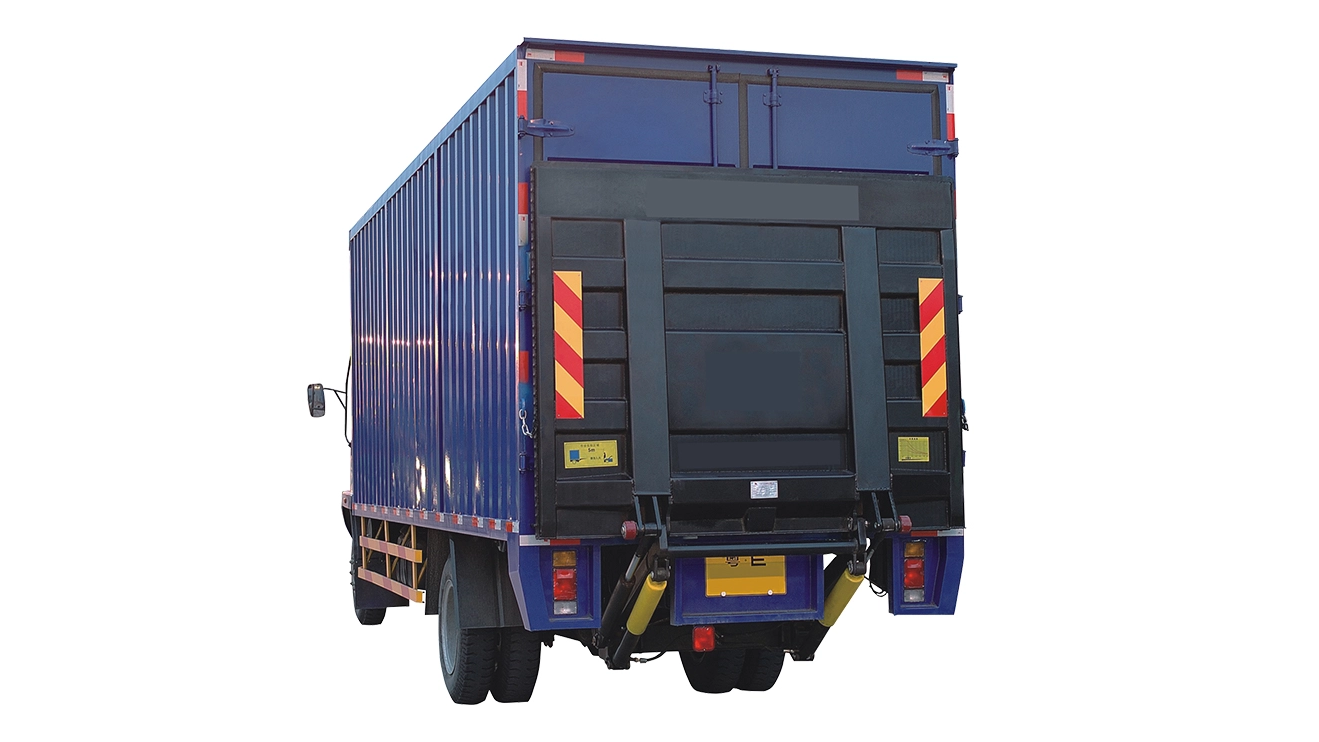
Not all tail lifts are created equal. The best type for a specific application depends on the vehicle, the types of goods being transported, and the operational requirements. Here are some of the most common designs you'll encounter.
Cantilever lifts are one of the most popular and versatile options. The platform extends straight out from the rear of the vehicle and serves as a large, stable bridge between the truck bed and the ground. When stowed, the platform folds up to form the rear closure of the vehicle.
· Advantages: They offer a large platform area and a high lifting capacity. The platform itself acts as a ramp, which is ideal for rolling items like cages, carts, or pallet jacks.
· Best for: General freight, food and beverage distribution, and any application where large or palletized goods are common.
As the name suggests, tuck-away lifts are designed to be stowed neatly underneath the vehicle's chassis when not in use. This keeps the rear of the vehicle completely clear, allowing unobstructed access to the cargo area and the ability to back up directly to a loading dock.
· Advantages: Unhindered access to the rear doors is the primary benefit. This makes them perfect for fleets that service a mix of locations, some with loading docks and some without.
· Best for: Dock-to-dock deliveries, general freight, and situations where rear access is a priority.
Column lifts, also known as vertical lifts, feature a platform that moves straight up and down along a set of vertical tracks mounted to the rear of the vehicle. They are known for their stability and high lifting capacity.
· Advantages: These lifts are extremely robust and can handle very heavy loads. The vertical movement ensures the platform remains level throughout the lifting cycle, which is crucial for sensitive or top-heavy cargo.
· Best for: Heavy-duty applications, such as moving large machinery, appliances, or furniture. They are also common on larger trucks and trailers.
Similar to tuck-away lifts, slider lifts are also stored under the vehicle's body. However, they are mounted on a sliding mechanism that allows them to be pulled out from under the chassis before unfolding for use.
· Advantages: Like tuck-away lifts, they provide clear access to the rear doors. They are often used on semi-trailers and drawbar trailers where space and configuration can be more complex.
· Best for: Heavy commercial vehicles and trailer applications where maximizing cargo space and maintaining dock access is essential.
Integrating a vehicle tail lift into a delivery fleet offers a multitude of advantages that can have a direct impact on a business's bottom line and operational efficiency.
The most significant benefit of tail lifting is the reduction in manual handling. Lifting heavy and awkward items is a leading cause of workplace injuries, particularly back strains and musculoskeletal disorders. A tail lift automates this process, protecting employees from physical strain and reducing the risk of accidents. This not only keeps your workforce healthier but also lowers the potential for workers' compensation claims.
Tail lifts dramatically speed up the loading and unloading process. What might take several workers a considerable amount of time to handle manually can be accomplished by a single operator in a fraction of the time. This means more deliveries can be completed in a day, increasing the overall productivity of your fleet.
With a tail lift, a vehicle is no longer dependent on the presence of a loading dock. This opens up a wider range of delivery locations, including residential areas, retail stores, and construction sites. This flexibility allows businesses to serve more customers and operate in diverse environments without needing specialized equipment at every stop.
The smooth, controlled motion of a hydraulic lift minimizes the jolts and drops that can occur during manual handling. This is especially important when transporting fragile or high-value items. By reducing the risk of damage, businesses can save money on replacements and maintain a higher level of customer satisfaction.
Tail lifting is more than just a convenience; it's a strategic investment in safety, efficiency, and operational flexibility. By automating the most physically demanding part of the delivery process, a vehicle tail lift empowers a single operator to handle heavy goods with ease, all while protecting them from injury and ensuring cargo remains secure.
If your business involves transporting goods, understanding the benefits of different tail lift models is the first step toward optimizing your fleet. From the versatility of a cantilever lift to the discreet convenience of a tuck-away model, there is a solution designed to meet the unique challenges of your industry. Investing in the right equipment not only streamlines your daily operations but also builds a more resilient and productive business for the future.


